
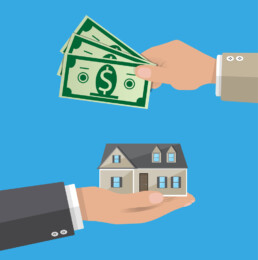
What is a Cash-out Refinance?
What is a Cash-out Refinance?
A traditional mortgage refinance is when an existing loan is replaced with a new loan and a new set of terms, in many cases with a lower interest rate. A cash-out refi replaces your existing mortgage just like a traditional refi, but the homeowner gets cash distributed. It also differs from a home equity line of credit which allows you to borrow cash using the equity of your house but it functions as a second mortgage.
Common reasons to go with a cash-out refi are:
- Paying off Credit Cards
- Financing a Business
- Covering College Tuition
- Managing Unexpected Expenses
- Making Improvements to your home
- Taking advantage of potential tax-deduction benefit from interest paid on loan
Using the equity of your home is a great way to access cash when you might need it for something else that comes up. However, having goals for what you are going to be spending that money on is the most important thing you can do to set yourself up for success. For example, going and using that money to purchase a brand new luxury vehicle might not be the smartest decision, but using that money to pay off other debts could be extremely beneficial.
Most popular cash-out refinance options:
Conventional Cash-out: This is available to qualified homeowners who have more than 20% equity in their homes.
FHA Cash-out: Is available to homeowners who have more than 15% equity in their homes.
VA Cash-out: Is available to homeowners who are US Veterans or currently an active service member. Often a VA Cash-out allows you to use even more of the equity from your loan.
Is Cash-out Refinancing Right for me? Here are some questions that are good to ask yourself.
Do you have enough equity in your home?
Maximum loan to value (LTV) ratio for a conventional and FHA range from 70% to 85%, as for VA the maximum is 100%. This means you will need more equity in your home to have a larger amount when cashing out from the refi.
Does it affect my monthly payment?
Cash-out refi does increase the total loan amount so your monthly payments will often increase as well.
Can an FHA loan be eligible for cash-out refinancing?
Yes, if you have an FHA insured mortgage you may qualify, but refinancing into a conventional loan may be better because it does not require mortgage insurance.
What are my options as a US veteran?
As a US veteran your cash out options may be eligible as a cash-out refinance with great rates and the flexibility to borrow up to 100% of the total value of your home.
Are there any additional costs when cashing out?
Yes, when you refinance there are closing fees that you will be responsible for. These costs can also include escrow fees, an appraisal, and upfront private mortgage insurance fees.
Am I required to have mortgage insurance?
Conventional loans - No
FHA loan - Yes, you will pay an up-front and annual insurance.
VA loan - Yes, you will pay a funding fee.
What are the requirements for a cash out refi?
- Pay Stubs
- Tax returns/ W-2s /or 1099’s
- A Credit Report
- Bank Statements
Now that you know all of the benefits of Cash Out Refinancing, give us a call and we'll walk you through the process to get started. 702-331-8185

Owning vs. Renting
When looking into housing, more than a fair share wonder what the difference between renting and
owning is. While renting and owning differ considerably, your choice will depend on your financial
situation and other needs depending on your circumstances. So you should ask yourself, which will cost
me personally more in the long run, and is it worth it?
So, what is the difference? Well, let's begin with renting. To start with, renting is, in its simplest
definition, paying someone for the use of something. So, when renting, you'll pay a monthly expense
displayed in your lease, which may also include other fees, such as utilities and storage.
While renting, it's typical to see rent increases, specifically when your lease is up for renewal. There is no
restriction on how frequently a landlord can raise the rent after completing your lease or even if they wish
to sell the property with you in it. Similarly, the same can be said about the limits on how much.
Regardless, your landlord is obligated to give notice before changing rates.
If you are wondering if renting has any more upsides, there may be a few that interest you. Firstly, renting
means, you can move whenever your lease ends, allowing for greater flexibility. You won't be tied down
to a home for any extended period, nor will you have to cover the expenses of maintaining a property.
Renting is temporary, and that's the most suitable option for numerous people.
On another note, owning can be a brand-new ball game with tangible benefits. In simple terms, becoming
a homeowner is, of course, owning your own home. You'll be able to possess your own home with a type
of stability not afforded by renting. Your space becomes your own, and you can choose to do with it what
you want.
To begin with, many have the misconception that buying a home will run your budget through the roof.
And while there is a higher upfront cost than renting, working with someone's budget is just what we do.
When you buy a home, you'll have many upfront costs, like your down payment and closing costs, but
they won't be your only expenses. Instead, you will also make a monthly mortgage payment. This
payment, however, will always stay the same, never changing, unlike the inconsistency that can come
with renting.
Of course, other things to remember, like HOA costs, taxes, insurance, and budgeting, are essential to
keep in mind. The goal is to have an agreeable amount left over every month, not sacrificing a
comfortable lifestyle for homeownership.
So, the overall cost of homeownership comes out higher than renting, as you are responsible for your
property. But, it's an investment, a part of your future that varies from person to person. So, it's up to you
whether you want a dream home your grandchildren may live in or a unique place to rent for a while.
That choice, in the end, is yours.