

Is it Better to Pay Off Your Mortgage or Invest?
When it comes down to it, this is not a simple or straightforward question.
There are so many variables that you really need to whip out a calculator, talk to your CPA, visit a financial planner and/or retirement specialist, and so on and so forth.
It also depends on your mortgage rate, your tax bracket, how much you owe on your mortgage, what type of mortgage you’ve got, the term, how long it will take to pay it off, etc.
Does your employer provide a 401k match? Is your money better off in another type of retirement account? Do you have other high-APR debt? How much do you need to set aside for a rainy day?
Mortgages have a lot of desirable qualities that make them the best debt to carry. For example, very few loans come with extremely low fixed interest rates that are tax deductible and amortized over a long period of time.
So if there was ever a loan to hold onto, a mortgage would be it, especially with rates where they’re at now.
If we assume inflation picks up in coming years, your existing mortgage becomes even more attractive to hang onto, as opposed to paying down, seeing that the debt will be paid back in cheaper dollars from the future.
If rates happen to go down, you have the option to refinance to a lower rate, which also provides flexibility. And if you invest money early on instead of paying down your mortgage, your gains can be exponentially better.
Finally, there’s also the emotional element. Some folks like the idea of being debt-free, for better or worse, financially. Not everyone likes to invest in complicated securities or even seemingly benign blue chip stocks, so their goal might be to eliminate the debt overhang as quickly as possible.
In either case, it’s always smart to set aside some readily accessible funds in the case of an emergency, or even to replace your roof or handle some other household repairs.
The key is really finding a balance. There’s no rule for how much you need to pay other than your payment due. You can make an extra payment here and there or look into biweekly mortgage payments, or just pay on schedule and spread your money around as needed/desired.
Here are some pros of both options:
Pros of Paying Off the Mortgage
- Pay less interest
- Own your home free and clear faster
- Get rid of mortgage insurance
- Gain more home equity
- If rates fall and you refinance, lower LTV = lower interest rate
- You can sell your home more easily
- Less risk of losing money in the stock market or elsewhere
- Less work
- No debt at retirement
- Peace of mind
Pros of Investing Instead
- Mortgage rates will never be this low again
- Long-term low fixed rate a great deal
- Mortgage interest deductible
- Money remains liquid
- Investment gains can exceed return on mortgage
- Investing early can make for greater long-term returns
- Ability to diversify your investments
- Contributions to retirement account may be more beneficial
- Inflation makes mortgage balance cheaper in the future
- Home could lose value
- Avoid throwing good money after bad if underwater on your mortgage
If you're interested in refinancing or applying for a new mortgage, contact my office at 702.331.8185.
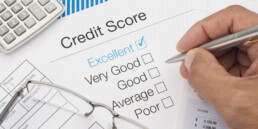
What Credit Score Do You Need to Qualify for a Mortgage?
If you’re thinking about purchasing a new home or refinancing your existing mortgage, you should know that your credit score is hugely important.
Banks and mortgage lenders use your credit score(s) to evaluate your creditworthiness, which translates to a higher or lower mortgage interest rate, and even determines eligibility.
Which Credit Score Do Mortgage Lenders Use?
First and foremost, you might be wondering which credit score mortgage lenders use, seeing that there’s no sense focusing on something they won’t actually look at to determine your creditworthiness.
The short answer is FICO scores, which are the industry standard and relied upon by just about everyone.
There are three FICO scores you need to be concerned with, including one from Equifax, one from Experian, and one from TransUnion, which are the three main credit bureaus.
Know Your Credit Scores Long Before Applying for a Mortgage
Before you actually head out to get a mortgage, it’s good practice to view your credit scores long before you apply. I’m talking several months in advance because any necessary credit score changes/improvements take time.
For example, any mistakes (or legitimate issues) holding your credit score down may take months to get cleared up. And you won’t want to leave anything to chance. Yes, the credit bureaus are bureaucratic, so nothing happens all that quickly.
Also, be sure to go with a service that allows you to see all 3 credit scores, as mortgage lenders typically pull a tri-merge credit report, which includes credit scores from all three bureaus.
The bureaus each report information a little differently, so knowing just one score won’t do you (or your lender) much good.
As far as lenders are concerned, it basically allows them to triple-check your credit before making the decision to hand over a large sum of money. They use the mid-score for pricing/qualification, so it’s imperative that all 3 credit scores are in tip-top shape.
For example, if your credit scores are 650, 680, and 720, a mortgage lender would use the 680 score, which is a decent but below-average credit score.
Lower Credit Score = Higher Mortgage Rate
Put simply, a lower credit score will lead to a higher mortgage rate, and vice versa. This all has to do with risk. The lower your credit score, the higher the chance you’ll default on your mortgage, at least that’s what the statistics say.
So if your credit score is too low, you probably won’t even get approved for a mortgage. Lenders simply won’t want your business. It’s just that risky.
Lately, banks and lenders have become even more stringent, requiring higher credit scores than they have in the past.
Credit Score Below 620 Considered Subprime
As far as conventional mortgage loans go, a credit score below 620 is typically considered subprime, meaning you’ll have a difficult time qualifying for a mortgage, and if you do, you’ll receive a subprime mortgage rate.
In general, you want a credit score above 720 to avoid any negative pricing adjustments, but a 760 credit score might be the new rule if you want the best possible terms and lowest rates. If you’ve got excellent credit, you can even get a reduced mortgage rate.
In summary, your credit score is probably the one thing you have complete control of, whereas things like job, income, and assets can be at the mercy of external forces. So do your best to strive for perfection in order to get the best deal on your mortgage.
Some Useful Credit Tips for Those Shopping for a Mortgage
- Credit scores are the single most important factor in determining your mortgage rate
- Aim for a 760+ credit score to get the best pricing and to avoid scrutiny
- Credit scores aren’t everything, what’s on your credit report matters as well!
- Know the contents of your credit report and what your scores are long before your lender does
- Any mistakes or missteps can be corrected, but take time, often several months!
- The FHA now requires a minimum credit score of 500, or 580 if you put less than 10% down
- Conventional loans generally require a minimum credit score of 620
- Credit scores below 620 are considered subprime and will be priced much higher
- Lenders pull all three of your credit scores and use the median score for qualification
- Low credit scores can also disqualify you for certain loan programs and/or limit your options
- Don’t mess with your credit before or during the loan application process!
Three Documents to Bring When Applying for a Conventional Loan
When you are planning to buy a home and need a mortgage, a conventional loan is one of the most common types of financing available. Make sure that you bring all of the necessary documentation when you apply for the loan.
Three Documents to Bring When Applying for a Conventional Loan
When you are considering the purchase of a home and are not paying cash for it, you will need a means of financing the purchase. Mortgage loans that are based on conventional loans in Las Vegas are a common way of financing the purchase of a house. When you head in to apply for the conventional loan, make sure that you bring these three pieces of documentation.
Proof of Income
You will need to bring proof of your income. This will include a pay stub and two of your most recent federal tax returns. If you work at more than one job, bring in a pay stub from each. If there is more than one adult applying for the loan, both people will need to bring these documents. These documents provide proof that your earnings will be enough to make the loan payments.
Social Security Card
Your social security number is used to run a credit check when you are applying for a mortgage backed by a conventional loan. A higher credit score means that you are a lower risk for defaulting. The higher your credit score, the lower the interest rate will be on your conventional loan.
Proof of Insurance
When you are applying for a conventional loan for the purchase of a home, the actual house is the collateral on the loan. In order to receive the mortgage, you are responsible for insuring the house. You will need to bring proof of homeowner's insurance from a legitimate insurance company. The proof will need to be on letterhead and contain the contact information of the agent offering the insurance policy. The insurance of the structure will ensure that the loan can be paid off in case of a catastrophic event such as a fire.
Looking for a seasoned mortgage professional?
Derek Parent and his team of professionals have the experience and passion you need to make purchasing your next home as stress-free as possible. We've had the opportunity to work with a wide diversity of clients, so we're ready for any situation!

What It Takes to Buy a Home
Understanding the many facets of buying a home allows you to avoid the mistakes commonly made by new homeowners.
Necessary Steps to Purchasing a Home
There are several options you can choose from when buying a new home. Along with your usual neighborhood house, condos and high rises can also be great options for your new home. Whatever your preference, purchasing a new home for you and your family may seem like a daunting process that's practically impossible to do right. It's certainly true that it's a lengthy process that can be tricky to fully comprehend. However, knowing more about the steps involved in this process and the order in which they occur will help dramatically with purchasing a new home.
Check Credit and Identify Affordable Payment Options
The first thing you need to do is check your credit score. You can receive one free copy each year. People with higher scores have the ability to receive better loans. It's essential that you ascertain exactly how much you can afford for monthly payments. An online mortgage calculator will assist with this. Additional costs may include the initial down payments, closing costs, and any other fees. Down payments can range anywhere from 0 percent to 20 percent depending on your loan, so make sure to check all your options for a home loan in Las Vegas.
Work With the Correct Lender and Real Estate Agent While Searching for a Home
The next thing you'll be required to do is locate the right lender and real estate agent for the job. The Better Business Bureau should have information on any lender or agent you're considering. Ask a lot of questions and make sure that you're comfortable before selecting a lender or agent. When you're searching for the right home, simply make a checklist of your utmost desires for what a home should have and set a budget. Find a home that fits as much of your criteria as possible at the price you can afford.
Make an Offer Before Selecting Mortgage and Closing
Once you've found the right home, it's time to make an offer. Start around 5 percent below the asking price. Negotiations often occur with these offers in order for both parties to be satisfied. You'll also need to obtain the right mortgage for your specific situation. After obtaining the mortgage, inspect the home and set a closing date. All that's left is for you to move in.
Looking for a seasoned mortgage professional?
The Derek Parent Team contains experienced and passionate professionals to help you with your home buying needs. We've had the opportunity to work with a wide diversity of clients - ranging from first-time homebuyers to high net-worth individuals to local heroes such as veterans, police officers, and firefighters. Contact us today!

2 Ways to Build Passive Income Streams in Different Markets
It's wise to build passive income streams in the young adult years and allow them to grow. Before long, you'll be earning significant money from your previous work.
Two Easy Ways to Build Significant Passive Income
Passive income is great because it's a way to earn income without putting in a lot of work on a consistent basis. Technically, passive income works because a person does an amount of work in the beginning, but the cash flow is reoccurring and provides financial health. This is especially beneficial for the older generations as they continue to age and desire to preserve their energy.
Invest in Real Estate: Condos, High Rises, Homes
For some people, the thought of owning multiple properties may sound daunting and almost impossible. However, there are many ways to earn money as a real estate investor. One of these ways involves rentals. You can purchase a home, condo, or high rise by researching various investment property financing options. Don't be deterred by the idea just because of the finances. When you prepare a house to put on the market as a rental, you'll be able to earn a lot of money on a monthly basis. A few years of rental income can easily pay off an entire mortgage without your help and the rest becomes profit.
Books, Music and Other Copyrighted Material
Books are great forms of passive income for building wealth. An author spends a significant amount of time writing a book. Once it's published and available for sale, the book will sell over and over. The same concept applies to music. The percentage that's paid to the creator is called a royalty. With the right marketing plan and a wide audience, anyone can experience royalty checks in the hundreds of thousands of dollars. There are also many celebrities who make a lot of money from their book tours and book signings. If you don't consider yourself a good writer, but you have a story to tell, hire a ghostwriter. They'll create the content and you'll be able to eloquently share the story with the world.
Finances and the Future
Passive income streams eliminate the process of exchanging time for money. When you free up your time and can still earn lots of money, this is a dream that most people long to experience. In the meantime, be intentional about creating passive income streams and you'll experience financial freedom in no time.

Preparing in Advance for Your Home Purchase
The home buying process is a fulfilling and gratifying one that requires financial acumen and discipline.
Preparing for Financial Planning and Home Ownership
Purchasing a home is a big deal. Whether you are looking to buy a high rise, condo, or house in Las Vegas, it takes a lot of dedication and patience to turn a dream of home buying into a reality. Once some people hit a certain age, they automatically assume it's time to purchase a house. While it's good to own a home, it's wise to be fully prepared to own that home. This mainly depends on what your financial situation is like and how well you can be disciplined with what you have.
Financial Status
Your finances play a major role in this process. While it would be ideal, most people don't have the money to purchase their home with cash. In this case, many people get loans to cover the mortgage. There are so many options to choose from such as first-time home buyer options and lending mortgage options. No matter what route you choose, it's best to have the money to make the down payment on the home. Some programs will allow you to only have 3-5% down to pay for a home. Many finance educators and experts encourage 20% down payment. You'll also want to consider the expenses outside of the home purchase such as furnishings, repairs, closing costs and relocation fees. If you prepare for a home purchase the right way, you won't need to deplete your savings to make it happen.
Discipline
It takes a high level of financial discipline to purchase a home. When the mortgage lenders take a look at your credit score, they want to know that your chances of paying back the loan are very high. This boils down to how you handle money and what your money mindset is like. If you're mindful and intentional about your savings and investment accounts, you'll be in great shape to experience the beauty of being a homeowner.
Consistency
It's one thing to gain all the information. It's another thing to make sure you remain consistent with the information you gain. If you make those baby steps with building discipline and apply those lessons you learn about handling your finances, you'll be in a dynamic position to purchase a home and handle all that comes along with it.
Derek Parent Team
Looking for a new condo or high rise to be your Las Vegas home? Contact us today! Derek is the only person in Las Vegas that offers down payment assistance and mortgage lending towards the purchase of high rise condos in Las Vegas.

6 Ways to Buy a Home Even if You Think You Can’t
There are many obstacles when buying your first home. It takes diligent work, and to say the least it is expensive. Especially when you consider the rise of real estate and interest rates. Here are six issues that I am sure you have heard will get in your way. However, I have good news for you, there are ways around them.
- The big 20% down payment
The standard in buying a home is 20 percent money down, which means a lump sum of 20% of the purchase price paid upfront. On a 300,000 house, the down payment would be at $60,000, which is definitely not pocket change. Putting down 20% will allow you to have a lower mortgage and monthly payments. However, according to the National Association of Realtors, 81 percent of Americans purchased their first home with less than 20 percent down to as little as 3 percent. Here are some alternative options to come up with a down payment that would get you near the 20% percent mark. One option is to go to your family and ask for a gift. You can get up to $14,000 tax-free money from your mom, dad, and even your grandparents. If all 4 of them decide to bless you with a gift, that is $56,000 tax free money that can go towards your down payment.
Another option that many people take advantage of is borrowing against their 401(k) or IRA. You are able to borrow up to $50,000, or 50% percent of your plan. First time homebuyers may qualify to take up to $10,000 from their IRA without having to pay early withdrawal penalties.
Now let’s say with all of that, you still don’t have enough money. If you have always dreamt of having a big lavish wedding as a child, you can always skip out on asking for that fancy blender and new 70-inch TV, and request money from your guests instead.
Another possibility is to completely skip on having the big wedding in general, and maybe opt to have something smaller and more intimate. This will surely save you a lot of money that you could be putting down on your first home.
- Bad Credit
This might be the biggest obstacle of all when buying a home. The lower a credit score, the higher the interest will be or you might not even qualify at all. The best thing to do is to clean up your credit as much as possible, pay your bills on time, and consult with a mortgage broker for suggestions on how to improve your score. A few things that a mortgage broker will tell you is to not incur more debt. Hold back on purchasing a new car and completely avoid opening up new lines of credit. Lastly, know your credit score inside and out. According to the National Foundation of Credit Counseling, 42% percent of Americans have not checked their credit score in at least 12 months. The two most important credit scores you need to know are 620 for the Federal Housing Administration for your insured loan, and 720 for a conventional loan.
- Knowing your price range.
A standard rule to determine your first homes price range is to figure out how much you can afford each month. Lenders say your PITI (principal, interest, taxes, and insurance) should not be more that 28% percent of your income before taxes. Some banks will go up to 33% percent which means if you earn $5,000 per month, the maximum PITI payment the lender will allow is $1,650 a month. Banks are looking for your back-end ratio; the sum of your PITI payment and all revolving debit (credit cards, car loans, all other loans you carry), which should be no higher than 41% to 50% percent of your gross monthly income.
- Fear of a bad loan
For many years a 30-year mortgage with a fixed interest rate was the only option. In recent years the industry has changed exponentially and developed new programs to help more people become homeowners. Some loans begin with a low interest rate and adjust upward by a certain percentage about every year. Many people choose to go with a low interest rates at the beginning of the loan and sell the house for income before the loan adjusts. Consult with your mortgage broker to find out what will be the best for you.
- Where to begin
Some first-time buyers think spending hours on Zillow and going to every open house is the best way to start; but its not. The best way to begin is to get educated. Fannie Mae and Freddie Mac both offer classes and a lot of information on their website that can support you through the process.
Some basics:
Real estate brokers work on a commission base, typically around 6% percent. There is no need to pay any fees upfront to an agent for them to help you walk into a house to check it out. If and when the property is sold they will get paid.
A house on the market for a long time does not necessarily mean it has any serious flaws. The seller may have an unrealistic expectation of the value of their home, or it could be something else. Don’t be afraid to offer lower and let your agent negotiate on your behalf.
You will see that every home will come with some type of issue large or small.
Unless you’re buying a brand new home, you should expect some fixing up to do. Now it’s up to you to decide the extra costs are worth buying the home.
- The offer is made and now I’m scared
You found the home of your dreams and you make your offer. This offer should come with at least two contingencies. 1. You’ve had the chance to have a private professional inspector come out and look at the property. If the inspector finds issues that are out of your budget to fix, you can always negotiate the purchase price or walk away. 2. Your offer is based on the ability to pay for the property. If for some reason you are not able to pay then you can simply walk away. After all negotiating is said and done, you and the seller will go into a process called escrow. That is where a third party will make sure all of the legalities are in excellence before completing the sale. Escrow will handle the money components, and seal the deal between you and the seller. Congratulations, you are now a first time homeowner!
Now that you know what it really takes to achieve the American Dream of homeownership, give us a call and we'll walk you through the process in no time! 702-331-8185

The Top 5 Most Common Refinancing Misconceptions
When it comes to refinancing your home, there are a few misconceptions that many people have. Before you rule out the possibility of refinancing your home, you might want to learn why it may be easier than you think.
Some of the most common refinance misconceptions are not having enough equity, not being able to afford the refinance, or that it simply doesn’t make sense because of high interest rates.
Regardless of why you think you wont qualify to refinance your home, don’t let what someone told you stop you from taking advantage of some of the great benefits it can provide such as lowering your monthly payment, cashing out to consolidate debt, or getting a lower interest rate.
Here are the most common myths when it comes to mortgage refinance:
- I don't have enough equity in my home
Most refinancing programs require you to have at least 20 percent equity in your home to qualify. However, new federally chartered programs make it possible for homeowners with little or no equity to refinance their home and take advantage of the benefits that comes along with refinancing. The federal program is called Home Affordable Refinance Program, or HARP, and it has helped many homeowners with low equity reap the benefits of refinancing. Just like any mortgage program, you must meet certain requirements before you can qualify, but if this sounds like your situation, a federally chartered program, such as HARP, may be able to help.
- I can't afford it
Just like any mortgage or refinance program, there are lending fees involved for processing the loan. The fees vary based on the lender, but the average cost is about 1.5 % of your total loan value. For example, if you have an estimated loan balance of $300,000, you will be required to pay $4,500 in fees. That may seem expensive, but don’t worry, most lenders will let you add those fees to the total loan balance and let you pay over time through your monthly mortgage payment.
- I was turned down before, so there's no reason to try again
Were you recently rejected for a mortgage application? Don’t give up just yet. Just because you were rejected in the past, doesn’t mean that you won’t ever qualify. If your financial situation has changed since you last applied, then there’s a chance you could qualify. Most applicants get rejected because of low credit, low income, or too much debt. However, if your financial situation changed, then you may be able to qualify. For example, maybe you got a raise at your job, raised your credit score, or paid off a good amount of debt. A change in any of these factors could get you one step closer to qualifying for a refinance program.
- It's easier to refinance with your existing lender
Many people think that refinancing with the lender that did your original loan is the best option. However, this is not always true. Lenders have different fees, interest rates, and programs that could be better for your situation. Even though you gave your financial documentation to your original lender when you did your first loan, you will still be required to resubmit new documentation that represents your current financial situation such as job status, income verification, bank statements, and credit score. So, the process to refinance your home won’t necessarily be easier with your original lender because you worked with them in the past. You are free to work with any lender you choose and there are many lenders in any given community, so it is smart to shop around and find the one that works best for you
- Interest rates are too high to make refinancing worthwhile
With talks about the rise in interest rates, you might think it is not a good time to refinance. However, in the mortgage industry, things are constantly changing. Regulations, loan limits, and interest rates can be different on any given day so it is smart to talk to a lender and find out what the current state of the industry is. When you secured your first loan you were locked into the interest rate that was available at that time. It might not seem like a significant change, but if you are able to lower your interest rate a full percentage point, it could save you a significant amount of money on your monthly payment when you refinance. There are also benefits of refinancing your mortgage to a shorter term so you can save more money long term on interest and pay your loan off faster. For example, if you refinance from a 30 year fixed rate mortgage to a 15 year fixed rate loan, you could reduce the amount of interest on the loan by $100,000 or more. Your monthly payment will be higher, but your interest rate and total interest owed over the life of your loan will go down.
If you are a homeowner and you're interested in refinancing your home, give us a call and we will guide you through the process! 702-331-8185
What is a Cash-out Refinance?
What is a Cash-out Refinance?
A traditional mortgage refinance is when an existing loan is replaced with a new loan and a new set of terms, in many cases with a lower interest rate. A cash-out refi replaces your existing mortgage just like a traditional refi, but the homeowner gets cash distributed. It also differs from a home equity line of credit which allows you to borrow cash using the equity of your house but it functions as a second mortgage.
Common reasons to go with a cash-out refi are:
- Paying off Credit Cards
- Financing a Business
- Covering College Tuition
- Managing Unexpected Expenses
- Making Improvements to your home
- Taking advantage of potential tax-deduction benefit from interest paid on loan
Using the equity of your home is a great way to access cash when you might need it for something else that comes up. However, having goals for what you are going to be spending that money on is the most important thing you can do to set yourself up for success. For example, going and using that money to purchase a brand new luxury vehicle might not be the smartest decision, but using that money to pay off other debts could be extremely beneficial.
Most popular cash-out refinance options:
Conventional Cash-out: This is available to qualified homeowners who have more than 20% equity in their homes.
FHA Cash-out: Is available to homeowners who have more than 15% equity in their homes.
VA Cash-out: Is available to homeowners who are US Veterans or currently an active service member. Often a VA Cash-out allows you to use even more of the equity from your loan.
Is Cash-out Refinancing Right for me? Here are some questions that are good to ask yourself.
Do you have enough equity in your home?
Maximum loan to value (LTV) ratio for a conventional and FHA range from 70% to 85%, as for VA the maximum is 100%. This means you will need more equity in your home to have a larger amount when cashing out from the refi.
Does it affect my monthly payment?
Cash-out refi does increase the total loan amount so your monthly payments will often increase as well.
Can an FHA loan be eligible for cash-out refinancing?
Yes, if you have an FHA insured mortgage you may qualify, but refinancing into a conventional loan may be better because it does not require mortgage insurance.
What are my options as a US veteran?
As a US veteran your cash out options may be eligible as a cash-out refinance with great rates and the flexibility to borrow up to 100% of the total value of your home.
Are there any additional costs when cashing out?
Yes, when you refinance there are closing fees that you will be responsible for. These costs can also include escrow fees, an appraisal, and upfront private mortgage insurance fees.
Am I required to have mortgage insurance?
Conventional loans - No
FHA loan - Yes, you will pay an up-front and annual insurance.
VA loan - Yes, you will pay a funding fee.
What are the requirements for a cash out refi?
- Pay Stubs
- Tax returns/ W-2s /or 1099’s
- A Credit Report
- Bank Statements
Now that you know all of the benefits of Cash Out Refinancing, give us a call and we'll walk you through the process to get started. 702-331-8185